
Designing Sleep & Recovery Suites: How Luxury Cabins Cater to the Rise of Sleep Tourism
The New Luxury: Deep, Restorative Sleep
There is a particular kind of tiredness that has become almost normal.
Not the satisfying fatigue that follows a long walk or a productive day—but something more persistent. A low-level exhaustion that sits beneath the surface. The kind that sleep doesn’t quite resolve.
You see it in your guests.
They arrive later than planned, often distracted. Their first instinct is not to look out at the landscape, but down at their phone. Conversations take time to settle. Breathing is shallow. Sleep, when it comes, is often fragmented.
And yet, this same guest will tell you they “just needed a break.”
The truth is—they need something deeper than that.
They need recovery.
A New Expectation, Not a Passing Trend
What is now being termed sleep tourism is often misunderstood as a niche offering—something reserved for high-end spas or longevity clinics.
In reality, it is simply a reflection of a broader shift in expectation.
Guests are no longer measuring a stay purely by what they see.
They are measuring it by how they feel during it—and more importantly, after it.
Do they sleep through the night?
Do they wake up without tension in their body?
Do they feel clearer, calmer, more present?
If the answer is yes, the experience stays with them.
If not, even the most visually impressive space begins to feel forgettable.
This is where many hospitality environments, particularly in the cabin and lodge sector, are quietly falling behind.
The Limitation of “Aesthetic Luxury”
Over the past decade, the industry has become highly effective at creating visually appealing spaces.
Clean lines. Large windows. Well-curated interiors.
But visual quality alone does not guarantee rest.
A space can be beautiful and still:
Carry sound in a way that unsettles sleep
Hold air that becomes stale overnight
Fluctuate in temperature just enough to disrupt deeper cycles
Contain materials that subtly overstimulate rather than calm
These are not design failures in the traditional sense.
They are simply the result of designing primarily for appearance, rather than physiology.
And as guest expectations evolve, this distinction becomes more visible.
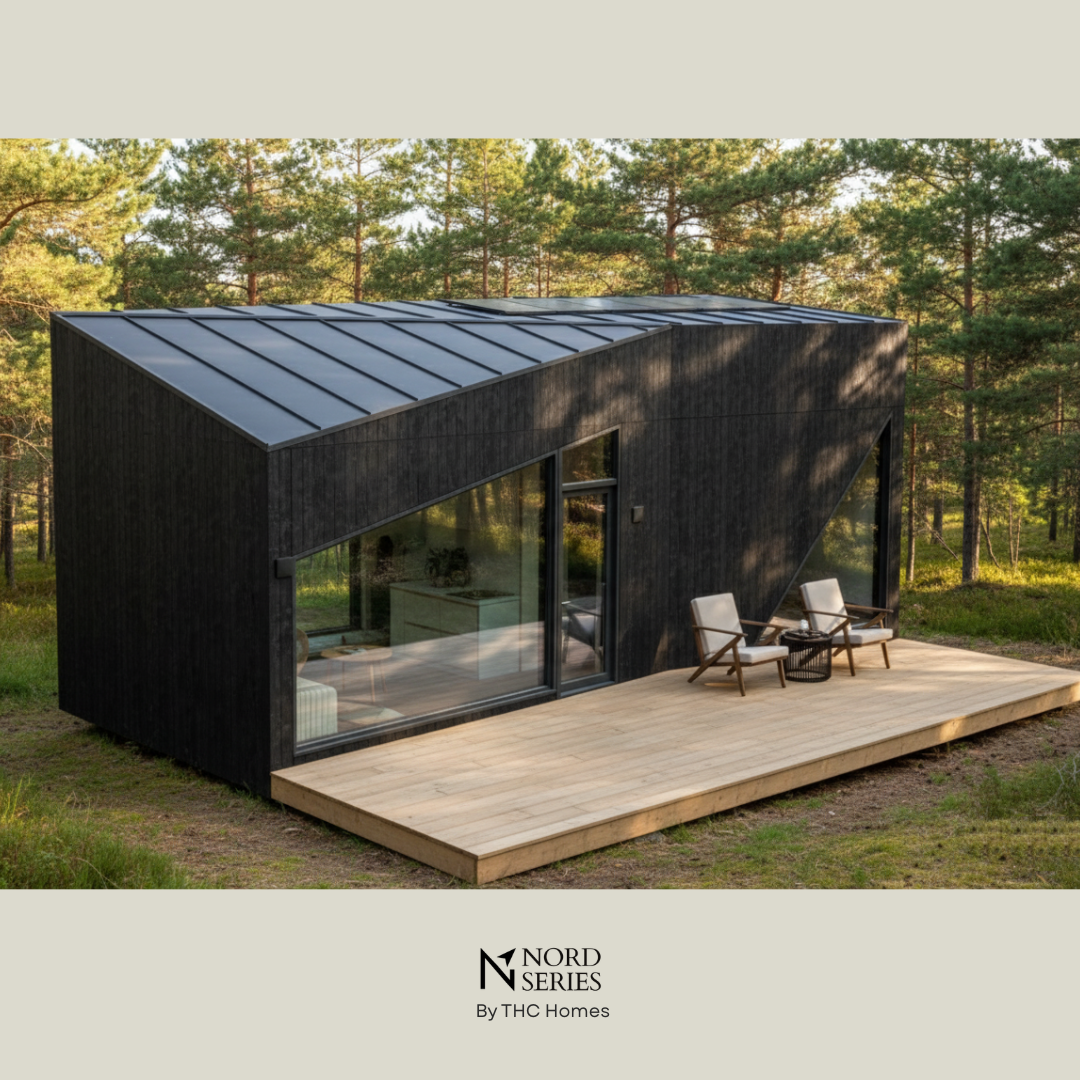
NordSeries Cabin
Designing for How the Body Actually Rests
To design a true sleep and recovery suite requires a shift in thinking.
It asks a different set of questions.
Not “How will this look?”
But “How will this space support the body over eight uninterrupted hours?”
Not “Will this impress on arrival?”
But “Will this restore by departure?”
This is where wellness-led architecture begins—not as an aesthetic style, but as a response to human need.
Quiet as a Design Principle
One of the first things to consider is sound.
Not obvious noise—but the subtle, persistent disturbances that prevent the body from fully settling.
A distant road.
Wind moving across lightweight structures.
Internal echoes within the space itself.
The human nervous system is highly sensitive to these inputs, even when we are not consciously aware of them.
A well-designed sleep environment does not simply reduce noise. It absorbs it.
This requires a level of construction that goes beyond typical cabin standards. More mass. More layering. A sense of solidity that removes the slight, almost imperceptible movement that many guests associate with temporary structures.
When this is done correctly, something shifts.
The space feels grounded.
Protected.
And the body responds accordingly.
Air: The Element Guests Don’t See, But Always Feel
If quiet allows the body to settle, air determines how deeply it recovers.
In many accommodation settings, air quality is left to chance. Windows open if needed. Ventilation is assumed rather than controlled.
But overnight, in a sealed environment, air changes quickly.
Carbon dioxide levels rise.
Humidity drifts.
Pollutants—often from materials themselves—remain within the space.
The result is subtle but significant.
Sleep becomes lighter.
Breathing becomes less efficient.
Morning energy feels slightly diminished.
This is where systems such as MVHR move from being a technical feature to a fundamental part of the guest experience.
By continuously cycling air—removing what is stale and introducing what is clean—the environment supports the body without interruption.
Guests rarely comment on the system itself.
They simply say they “slept well.”
And often, they cannot quite explain why.
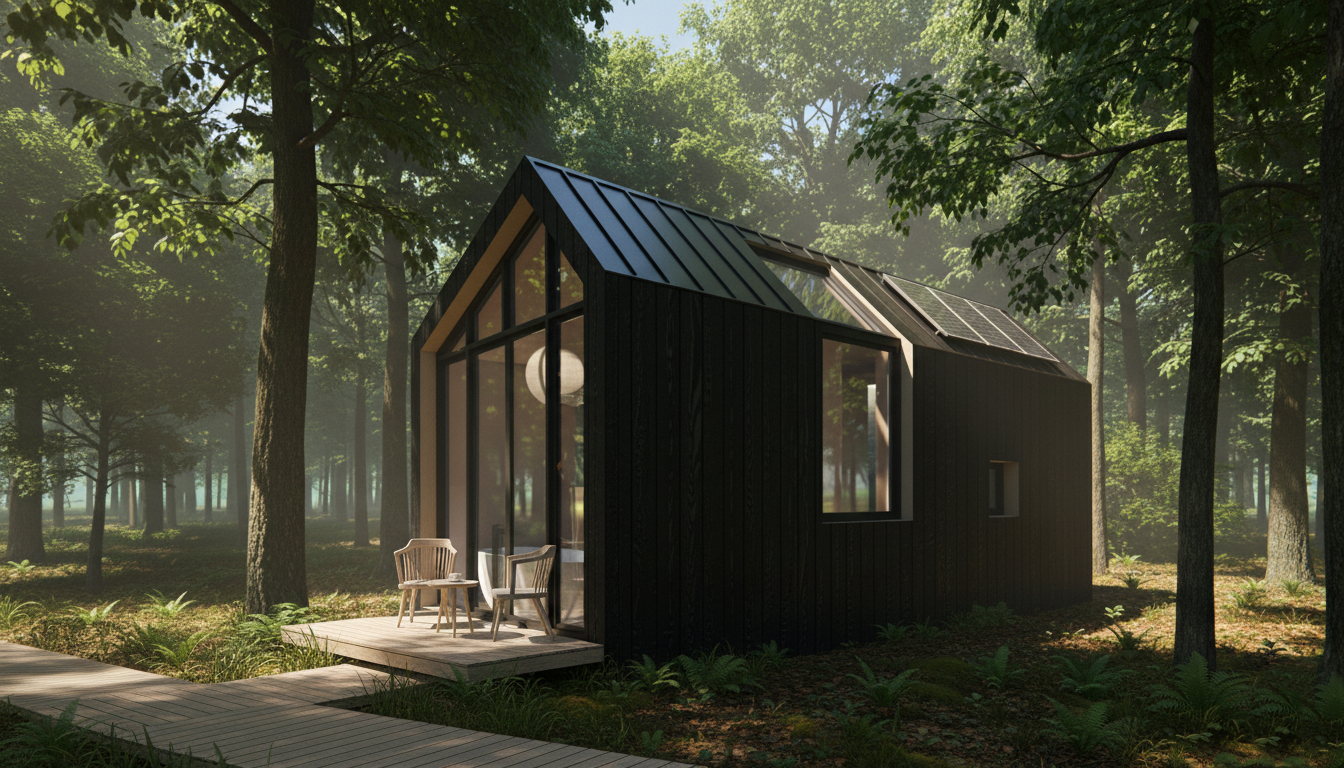
NordSky Cabin, NordSeries by THC Homes
Light and the Relearning of Natural Rhythm
Modern life has largely disconnected us from natural light patterns.
Artificial lighting extends the day. Screens blur the boundary between evening and night. The body’s internal rhythm—once guided by sunrise and sunset—becomes confused.
A well-designed cabin has the ability to gently restore this rhythm.
Not through technology alone, but through architecture.
The way light enters in the morning.
The direction of views.
The softness of the interior as evening approaches.
These are quiet design decisions, but they carry weight.
Over the course of a stay, guests begin to feel the difference.
They fall asleep more easily.
Wake more naturally.
Experience a steadier energy throughout the day.
This is not intervention.
It is alignment.
The Psychological Impact of Materials
There is also a more subtle layer to consider—the emotional response to materials.
We spend much of our daily lives surrounded by synthetic finishes. Hard surfaces. Gloss. Precision.
While these may signal modernity, they do not always support rest.
Natural materials—particularly timber—introduce something different.
They soften the environment.
Absorb sound.
Create warmth without excess.
Combined with a restrained, neutral palette, they allow the mind to slow.
This is not about minimalism for its own sake.
It is about removing what is unnecessary so the body and mind can settle without distraction.
Thermal Stability and the Absence of Disruption
Temperature is rarely the focus of guest feedback—unless it is wrong.
Too warm, and sleep becomes restless.
Too cold, and the body remains alert.
What is often overlooked is how even small fluctuations can prevent deeper stages of sleep.
A high-performance building envelope changes this entirely.
It creates consistency.
No sudden changes. No reliance on reactive heating or cooling. Just a stable, balanced environment that allows the body to remain undisturbed.
Like many aspects of good design, its success lies in its invisibility.
Beyond the Interior: Recovery as an Experience
While the cabin itself forms the core, the most compelling sleep-focused environments extend beyond it.
A guest may begin their evening in a sauna, allowing heat to release physical tension.
They may step into cold water, resetting circulation and awareness.
They may sit outside afterwards, wrapped in stillness, listening to the landscape rather than interacting with it.
These moments are not additional luxuries.
They are part of a wider rhythm of recovery.
Effort followed by stillness.
Heat followed by cold.
Stimulation followed by rest.
When combined with a space designed for sleep, they create a complete experience—one that feels both intentional and deeply restorative.
Why This Matters Commercially
For operators, this shift towards recovery-led design is not abstract.
It has clear, tangible implications.
Guests who sleep well remember it.
They speak about it differently.
They return more readily.
They are willing to invest more in the experience.
Importantly, their feedback moves beyond surface-level commentary.
Instead of noting finishes or features, they describe how the stay made them feel.
And in a market where differentiation is increasingly difficult, this becomes a defining advantage.
Because while aesthetics can be replicated, experience cannot.
A New Definition of Luxury
We are entering a quieter era of hospitality.
One where luxury is no longer about addition, but subtraction.
Removing noise.
Reducing toxins.
Softening environments.
Creating space—for breath, for stillness, for recovery.
This aligns closely with a broader cultural shift.
An understanding that the world is overstimulated, and that environments—particularly those designed for rest—have a responsibility to restore balance.
Designing for What Truly Matters
The most effective sleep and recovery suites are not those that try to do more.
They are those that understand what to prioritise.
Air.
Light.
Sound.
Material.
Temperature.
Get these right, and something powerful happens.
Guests do not just enjoy their stay.
They leave different to how they arrived.
More rested.
More present.
More themselves.
And that is ultimately what they return for.
Want to create deeper rest at your hotel, estate or spa retreat?
Visit the NordSeries Range today.