Premium Cabin ROI: The Cheapest Cabin Isn’t Always the Most Profitable
When hospitality operators compare new accommodation, there is one number that tends to dominate the conversation:
How much does the building cost?
It is an understandable place to start.
If one cabin costs £50,000 and another costs £70,000, the £50,000 option appears to begin the project £20,000 ahead.
But a cabin isn't purchased simply to exist on a site.
It is purchased to generate revenue.
For a vineyard adding overnight stays, a wedding venue keeping guests on site, a luxury glamping retreat expanding its offering or a boutique hotel increasing its room count, the more useful question is not:
“Which cabin costs less?”
It is:
“Which building is likely to create the strongest return over its working life?”
Because purchase price is only one part of the equation.
Year-round occupancy, achievable nightly rate, energy consumption, maintenance, refurbishment, longevity and the guest experience all influence what that accommodation ultimately returns to the business.
Start with the January test
Almost any cabin can look appealing in July.
The doors are open. Sunlight pours through the glazing. Guests sit outside. The landscape does much of the work.
The real test of premium accommodation comes on a wet Tuesday in January.
Can the operator still confidently sell the stay?
Does the room remain warm without obvious draughts?
Does the temperature stay comfortable throughout the night?
Does the glazing feel cold?
Can guests enjoy the landscape while still feeling protected from the weather?
And most importantly:
Does it still feel like premium accommodation when everyone has to stay indoors?
This matters because hospitality demand does not disappear outside summer.
VisitEngland recorded England hotel occupancy of 65% in January 2025, 73% in February and 75% in March, compared with 85% in July. The winter market is smaller, but it is far from absent. VisitBritain
For an operator investing tens or hundreds of thousands of pounds into new accommodation, those additional trading months matter.
What could additional winter occupancy actually be worth?
Consider a deliberately simple example.
Suppose one premium cabin achieves only:
30 additional occupied nights each winter
at an average rate of:
£200 per night
That represents:
£6,000 additional annual revenue per cabin.
Across five cabins:
£30,000 per year.
Across ten:
£60,000 per year.
Over several years, relatively small differences in year-round usability can dwarf an initial difference in purchase price.
This isn't a forecast of what every hospitality business will achieve. Location, demand, marketing, amenities and pricing strategy all matter.
But it demonstrates why comparing two buildings solely by their initial cost can be misleading.
Protecting room rate matters too
Occupancy is only half of the conversation.
The other is ADR — Average Daily Rate.
An operator may technically be able to let lower-specification accommodation throughout winter, but only by heavily reducing the price.
That creates a different commercial outcome.
Imagine a cabin that comfortably achieves £250 on desirable summer weekends with 5 star reviews but has to fall to £110–£120 during colder periods alongside 3 star reviews because the experience no longer feels sufficiently premium.
Now compare that with accommodation that remains desirable in January because it was genuinely designed for year-round comfort.
The opportunity isn't necessarily to charge July Saturday-night pricing every day of the year.
It is to protect more of the premium positioning for more of the year.
That matters particularly for businesses such as:
Vineyards, where accommodation can extend a visit beyond the tasting room and support additional food, drink and experience revenue.
Wedding venues, where quality accommodation allows more guests to remain on site and extends the overall wedding experience.
Luxury glamping and retreat operators, where guests are often specifically paying to escape, rest and reconnect with nature.
Boutique hotels, where cabins can increase key count without the disruption and complexity of extending the original hotel building.
These customers are not simply purchasing another bedroom.
They are purchasing an asset that needs to generate income.
The cost nobody sees on the quotation
Two cabins generating the same room rate may still create very different profits.
Why?
Because revenue isn't profit.
A more useful equation is:
Accommodation revenue
– energy
– maintenance
– refurbishment
– operational downtime
= commercial return
This is where the building itself begins to matter.
At THC Homes, our approach starts with the fabric of the building rather than asking heating and cooling technology to compensate for weak construction. Structure, insulation, airtightness, glazing and controlled ventilation are considered together. THC Homes How We Build
The principle is straightforward:
Create a stable building first. Then use technology to maintain comfort efficiently.
A room that rapidly loses heat needs continual energy input to replace it.
Likewise, poorly controlled solar gain can create significant overheating in warmer months.
A better-performing envelope reduces those extremes.
For an individual guest staying for two nights, the difference may simply feel like comfort.
For an operator running ten, twenty or fifty units year after year, it becomes an operating-cost question.
What will the cabin look like after guest 500?
This is another area that is easily overlooked during procurement.
The accommodation looks immaculate in the brochure.
But hospitality interiors have a difficult life.
Suitcases hit walls.
Wet shoes cross floors.
Bathrooms are repeatedly cleaned.
Doors, kitchens, switches and furniture may be used by hundreds of different guests.
A product should therefore be assessed not simply on how impressive it appears on handover day, but on:
How easily surfaces can be maintained.
Whether damaged components can be repaired or replaced.
How quickly interiors begin to look tired.
How disruptive future refurbishment will be.
Our own hospitality design principles specifically consider repeated cleaning, maintainability, service access and replacement when designing guest accommodation. How we design
And material selection matters.
We favour real timber and natural finishes because they create the atmosphere we want, but durability is equally important. Good natural materials can be protected, refinished and refreshed rather than simply discarded when the surface deteriorates.
That is fundamentally different from designing an interior primarily to look impressive in the first set of marketing photographs.
Longevity needs a more intelligent conversation
There is a temptation within the industry to compare one category of building with another using simplistic lifespan claims.
For example:
“A caravan lasts X years.”
“A modular building lasts X years.”
The reality is more nuanced.
BS 3632:2023 is a specification for the manufacture of residential park homes intended for permanent residence. It includes requirements relating to areas such as thermal performance and moisture control, but it does not simply establish a universal lifespan for every building constructed to the standard. BSI Knowledge
Likewise, saying something is “Building Regulations compliant” does not by itself guarantee a particular service life.
A better procurement question is:
What exactly is the building made from, how is it detailed, and what can be maintained or renewed?
Look at:
structural system
moisture management
external cladding
roof system
window specification
internal materials
replaceability of components
access to services
maintenance requirements
quality-control process
The badge matters.
The building behind the badge matters more.
A cheap replacement can become very expensive
Imagine that accommodation requires major refurbishment or complete replacement considerably earlier than expected.
The operator isn't simply purchasing another cabin.
There may also be: Transport costs. Crane costs. Removal and disposal. New foundations or alterations. Utility reconnection. Landscaping repairs. Lost booking periods. Management time. Potential planning implications.
Suddenly a saving made at the beginning of the project can look much less significant.
This is why we think hospitality operators should consider accommodation through a 10-, 15- or 20-year commercial lens, rather than simply comparing quotations in year zero.
Premium should describe the experience — not the shopping list
Hospitality has become exceptionally good at making accommodation look premium.
Designer taps. Feature lighting. Expensive bedding. Hot tubs. Saunas. Beautiful styling.
None of those things are inherently wrong. We use many of them ourselves.
But they sit on top of the building.
And underneath them is the part of the guest experience that is much harder to photograph:
Was the room quiet?
Was the air fresh?
Did the temperature remain comfortable all night?
Did the space feel calm?
Did the guest actually sleep well?
Our deeper-rest philosophy starts from the belief that a beautiful interior alone isn't enough. Comfort begins with the building, the air inside it, temperature, acoustics, light and the way materials and architecture shape how somebody feels. WHY & HOW WE CREATE DEEPER REST
That is why we describe NordSeries spaces as being engineered for deeper rest.
The sentence every hospitality operator wants to hear
There is a guest reaction that is worth considerably more than praise for the bathroom taps.
It is:
“I haven't slept like that in ages.”
Because that is an experience people remember.
The best hospitality accommodation isn't simply photogenic enough to generate a booking.
It needs to deliver when the guest arrives.
And that experience can support some of the most valuable things within a hospitality business:
Premium positioning.
Strong reviews.
Recommendations.
Repeat visits.
Brand reputation.
And confidence in the price being charged.
No building can guarantee those commercial outcomes by itself.
But the quality of the accommodation undoubtedly forms part of the guest experience on which they depend.
Different hospitality businesses. The same investment question.
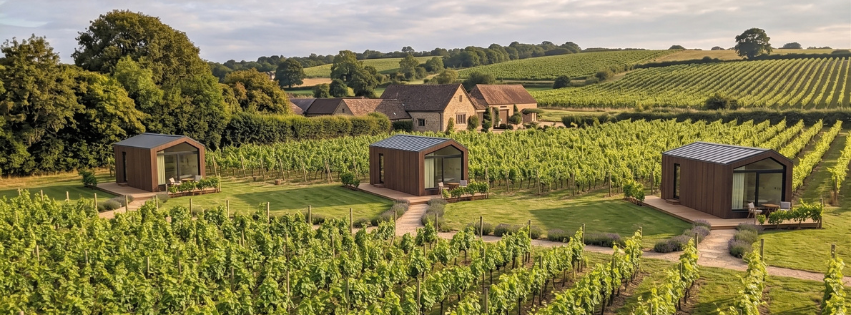
For a vineyard considering accommodation, the opportunity may be turning an afternoon visit into a complete overnight experience.
For a wedding venue adding guest accommodation, it may be keeping more of the wedding party on the estate and creating another revenue stream around an existing event.
For a luxury glamping operator, it may be extending the usable season while moving beyond the increasingly crowded “pod” market.
For a boutique hotel, it may be adding high-value rooms across underused land without materially changing the character of the existing property.
Different businesses.
Different guests.
Different sites.
But the investment question remains remarkably similar:
What will this accommodation earn, cost and contribute to the guest experience over its lifetime?
Don't compare cabin prices. Compare cabin economics.
Before selecting a manufacturer, we would suggest looking beyond the quotation.
Ask:
Can I confidently sell this accommodation in January as well as July?
Will I need to discount heavily outside peak season?
What will it cost to heat, cool and ventilate?
How will the interior stand up to hundreds of guest stays?
What will require refurbishment?
Can individual components be maintained and replaced?
What is the building actually constructed from?
Will it still support my brand five or ten years from now?
And perhaps most importantly:
Will my guests feel that what they paid was worth it?
Because a cabin shouldn't be judged only by what it costs on delivery day.
It should be judged by what it can earn, what it costs to operate, how long it continues to perform and how successfully it delivers the experience your guests came for.
That is the difference between buying accommodation and investing in accommodation.
NordSeries by THC Homes
Deeper Rest Leisure Spaces
High-performance cabins and lodges for vineyards, wedding venues, boutique hotels, luxury glamping sites, retreats and hospitality operators.
Engineered for deeper rest. Designed for year-round hospitality.