Vineyard Accommodation UK: How Wineries Can Increase Revenue & Wine Sales
A vineyard tasting can be going perfectly — until someone reaches for the car keys.
The wine is good. The setting is beautiful. Your guests are relaxed. They might happily order another bottle, stay for dinner and watch the sun disappear behind the vines.
But they need to drive home.
So the tasting ends, perhaps one bottle is purchased from the cellar door, and two customers who might have spent the entire evening with you leave the estate.
For UK vineyard owners, this presents an increasingly interesting question:
What could each visitor be worth to your business if they didn't have to leave?
With British wine production growing, vineyard tourism gaining momentum and more consumers looking for memorable UK short breaks, vineyard accommodation has the potential to turn an afternoon experience into an entire stay.
And importantly, the opportunity isn't simply the nightly room rate.
It is the chance to increase dwell time, food and wine sales, direct-to-consumer purchases and the overall value of every guest who already chooses to visit your estate.
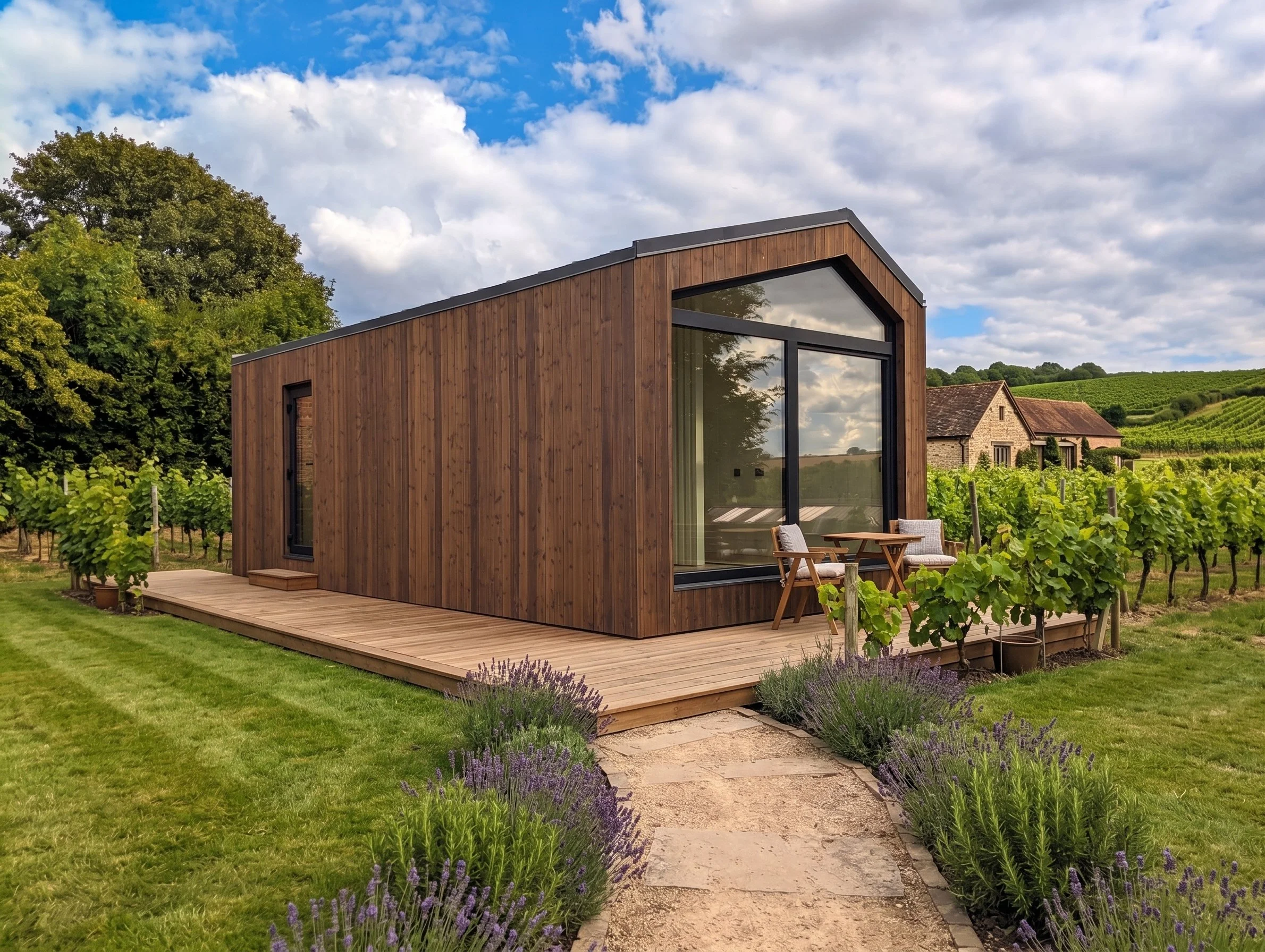
Render of the Nordsky Cabin set in a stunning vineyard.
The UK is becoming a serious wine destination
For generations, a wine holiday might have meant Bordeaux, Tuscany, Rioja or the Douro Valley.
That picture is beginning to change.
The UK now has 1,158 registered vineyards, around 280 wineries, and approximately 4,841 hectares under vine. The 2025 harvest alone produced around 16.5 million bottles of British wine.
Vineyards are no longer limited to a handful of established estates in Sussex and Kent either. Wine regions and organised wine trails are developing across England and Wales, including the Midlands, Yorkshire and the West of England.
The opportunity is therefore bigger than wine production alone.
A British vineyard increasingly has the potential to become a destination.
A place to walk.
A place to taste.
A place to eat.
A place to celebrate.
And, increasingly, a place to stay.
This change matters because tourism allows the vineyard to generate value from something beyond the bottle itself: the estate, the landscape, the story and the experience of being there.
Wine tourism is already generating meaningful revenue
Wine tourism is not a theoretical future market.
Around 300 UK vineyards and wineries are already open to visitors, and WineGB recorded approximately 1.5 million visits to vineyards and wineries, representing growth of 55% compared with 2022.
More significant for vineyard owners is what those visitors mean commercially.
WineGB's research found that wine tourism accounts for approximately 25% of total winery income on average.
And producers expect the market to continue growing. In WineGB's tourism research, 60% of respondents expected visitor numbers to increase by more than 20% over the following five years, while 60% planned further investment in wine tourism.
Their three leading areas for investment?
Food offerings. On-site events. Accommodation.
This suggests that the evolution of British wine tourism is already underway.
The question for an individual estate is where it wants to sit within it.
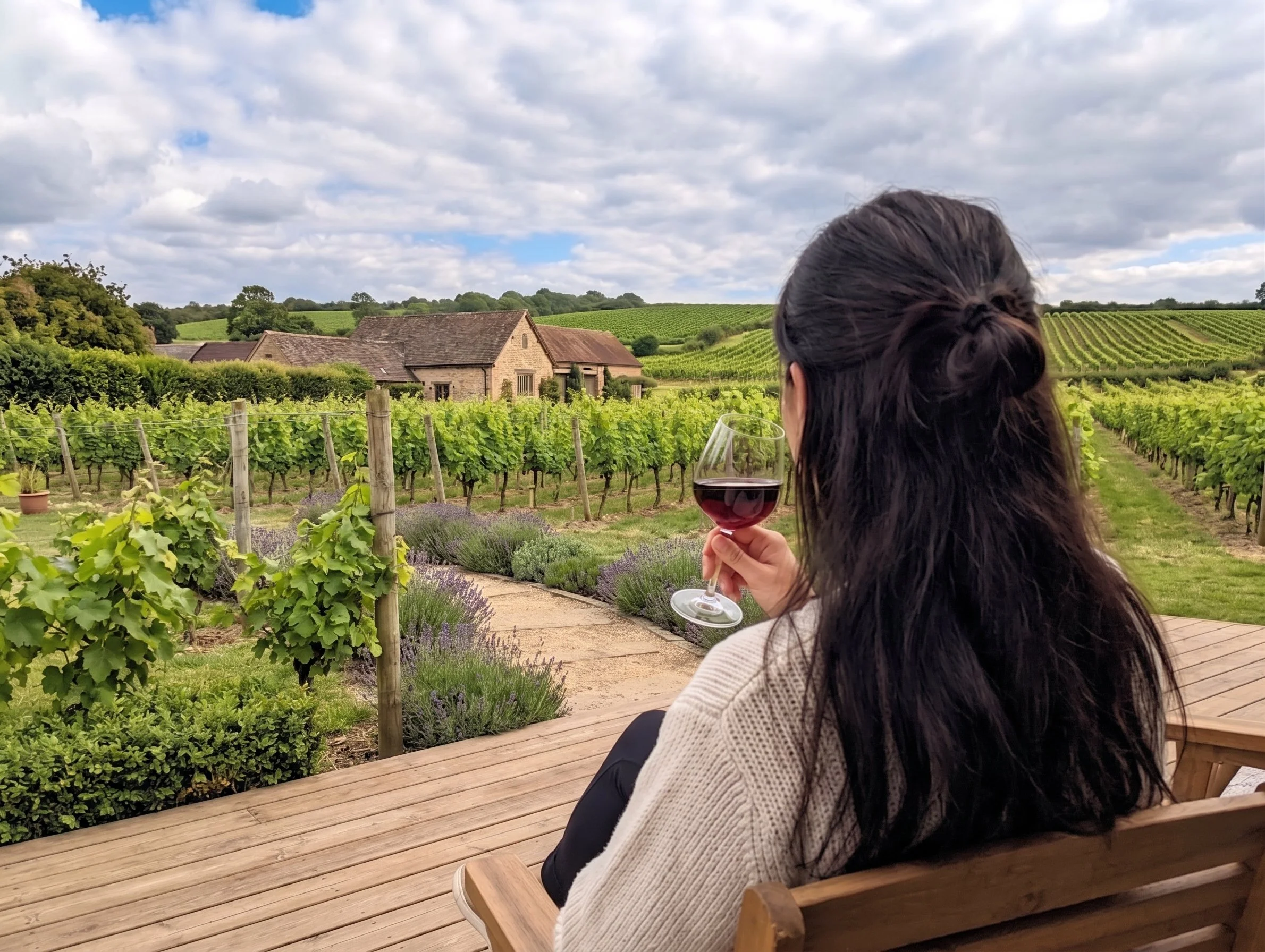
Vineyard accommodation can increase expenditure on site
The traditional vineyard visit has a natural spending limit
For many vineyards, the visitor journey is still relatively short.
A guest arrives, takes a vineyard tour, enjoys a tasting, visits the cellar door and perhaps buys a bottle or two before heading home.
It is a successful transaction.
But it has a natural limit: time.
And wine tourism has another very obvious constraint.
Driving.
If your customers have travelled to a rural vineyard by car, somebody needs to remain able to drive away safely. That can shorten a tasting, prevent another bottle being opened over dinner and bring an otherwise enjoyable experience to an early conclusion.
The vineyard has successfully attracted the customer.
It simply hasn't been able to retain them for very long.
Accommodation changes that dynamic.
What happens when your vineyard guests don't have to leave?
Imagine the same visit with vineyard accommodation available on the estate.
The guests arrive in the afternoon and join a vineyard tour.
They taste the wines.
They check into their lodge.
Later, they enjoy food overlooking the vines and order a bottle discovered during their tasting.
There's no rush to leave and no immediate drive home.
The following morning they have breakfast, take another walk around the estate and return to the cellar door before departure.
You haven't simply sold them a night in a room.
You have changed a two-hour customer journey into an 18-hour relationship with your brand.
That creates considerably more opportunities for revenue.
Accommodation can sit alongside tasting income, evening food, bottles consumed during the stay, breakfast, upgrades, private experiences and wine purchased to take home.
WineGB has reported that 1.73 million bottles were sold directly to local customers and visitors through cellar doors in 2024. Keeping visitors on the estate for longer creates another opportunity to strengthen an already valuable direct-to-consumer sales channel.
From a £95 vineyard visit to a £500 overnight experience
Consider two fictional customers visiting a vineyard. These figures are illustrative rather than a forecast, but they demonstrate how dramatically the value of the same pair of visitors can change.
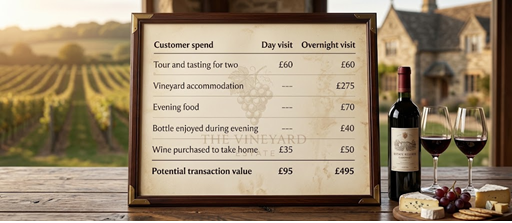
The important number isn't necessarily £495.
Every vineyard will have different pricing, products and customers.
The important difference is the number of opportunities to spend.
The same two customers arrived at the same vineyard because they were interested in the same wine.
One experience ended after the tasting.
The other continued into the evening.
Vineyard accommodation can increase wine sales, not just room revenue
This is what makes accommodation particularly interesting for a winery.
A normal accommodation provider primarily makes money from selling the stay.
A vineyard has something else to sell.
Its own product.
An overnight guest has more time to discover different wines, enjoy a bottle responsibly with food, learn more about the producer and return to the cellar door before departing.
That deeper interaction may also strengthen future direct-to-consumer relationships.
A visitor who remembers where they slept, what they drank with dinner and the vineyard they woke up overlooking has experienced the wine very differently from somebody who sampled it for twenty minutes at a tasting counter.
The room therefore doesn't need to be viewed as a standalone profit centre.
It can become part of the sales environment for the vineyard itself.
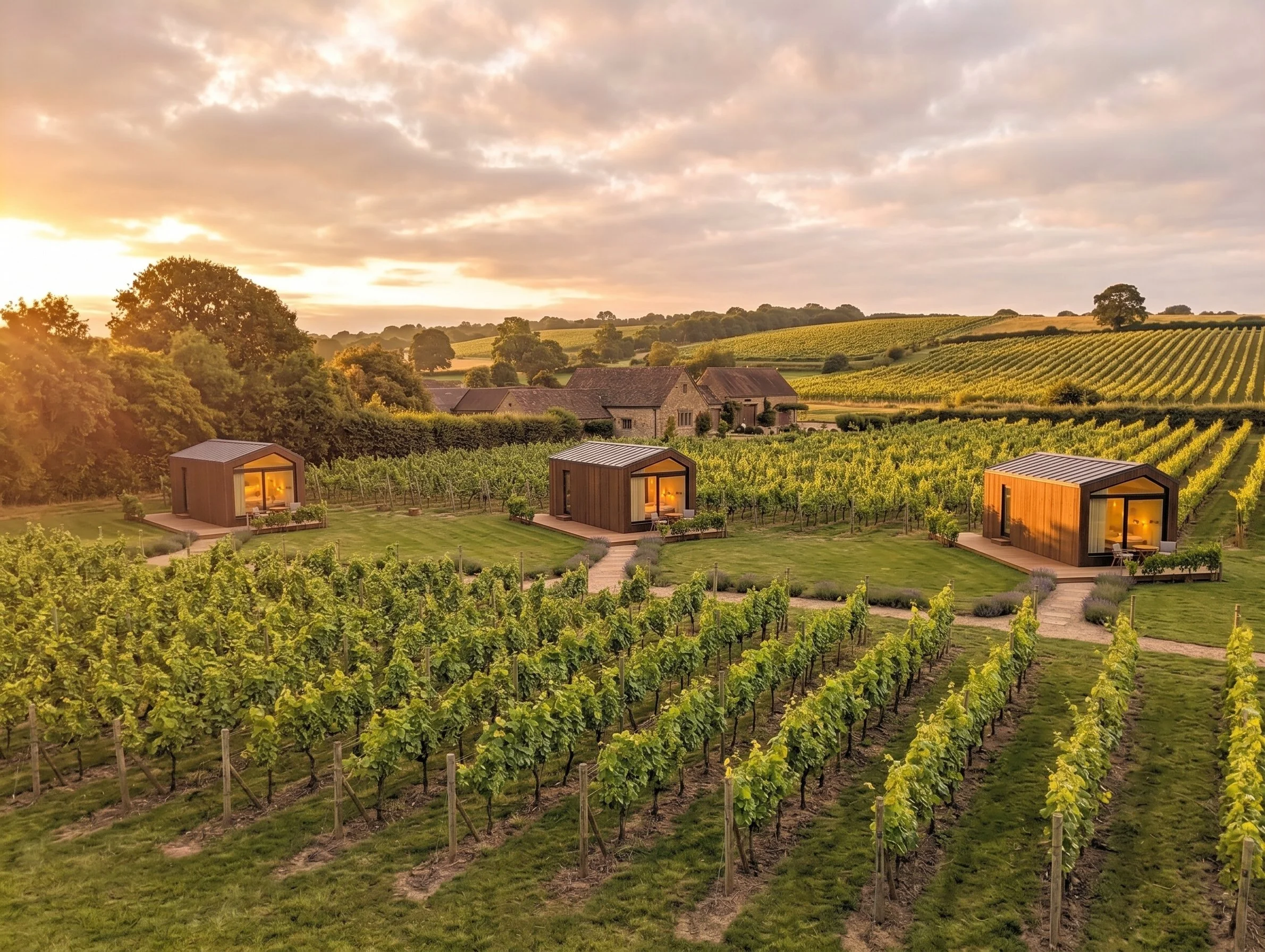
Vineyard accommodation offers a place to share an additional bottle and more time to consider a take home bottle the next day.
Your vineyard may already contain the most valuable part of the accommodation
Traditional hospitality developments often spend significant amounts of money creating an experience around a building.
Vineyards begin from a different position.
You already have the experience.
Rows of vines disappearing across the landscape.
The changing colours of the growing season.
The production story.
The wine.
The cellar door.
The people behind it.
The smells, sounds and changing light of a working vineyard.
Accommodation doesn't necessarily need to manufacture another attraction.
It needs to give guests a beautiful way to remain within the attraction you already own.
This can be particularly powerful for smaller independent vineyards because it allows the landscape and story of the estate to become part of the value of every night's stay.
Why vineyard accommodation can command a premium
Guests rarely assess experience-led accommodation purely by floor area.
They are purchasing a setting.
Privacy.
Views.
A sense of occasion.
And a story they cannot easily recreate somewhere else.
This is why well-positioned vineyard accommodation can sit within the premium end of the UK short-break market.
There is already evidence of the model working in Britain.
Tinwood Estate in West Sussex, for example, operates eight luxury lodges overlooking its vines, alongside vineyard tours, tastings, food, sauna access and optional chef-prepared evening meals. Current lodge pricing is around £285 per night, while dinner hampers create an additional opportunity for evening spend without the guest leaving the estate.
Purpose-built vineyard lodges are also already operating at estates such as Three Choirs Vineyard in Gloucestershire, demonstrating that overnight accommodation doesn't have to mean constructing a conventional vineyard hotel.
The landscape is doing much of the heavy lifting.
The accommodation needs to frame it.
Could three vineyard lodges create a meaningful new revenue stream?
Consider another simple illustration.
Three premium vineyard lodges achieving an average nightly rate of £275 and average occupancy of 60% would represent approximately:
£180,675 in gross annual room revenue.
That is before any additional revenue from wine, food, tours, events or optional guest experiences.
It is also before operating costs, VAT where applicable, booking commissions, housekeeping, finance, maintenance and other expenses, so it should not be read as projected profit.
But it demonstrates why the economics of adding a relatively small number of accommodation units are worth investigating.
For a vineyard already attracting visitors, the first feasibility question may therefore not be:
"Could we fill a hotel?"
It could simply be:
"Could we keep three couples here tonight?"
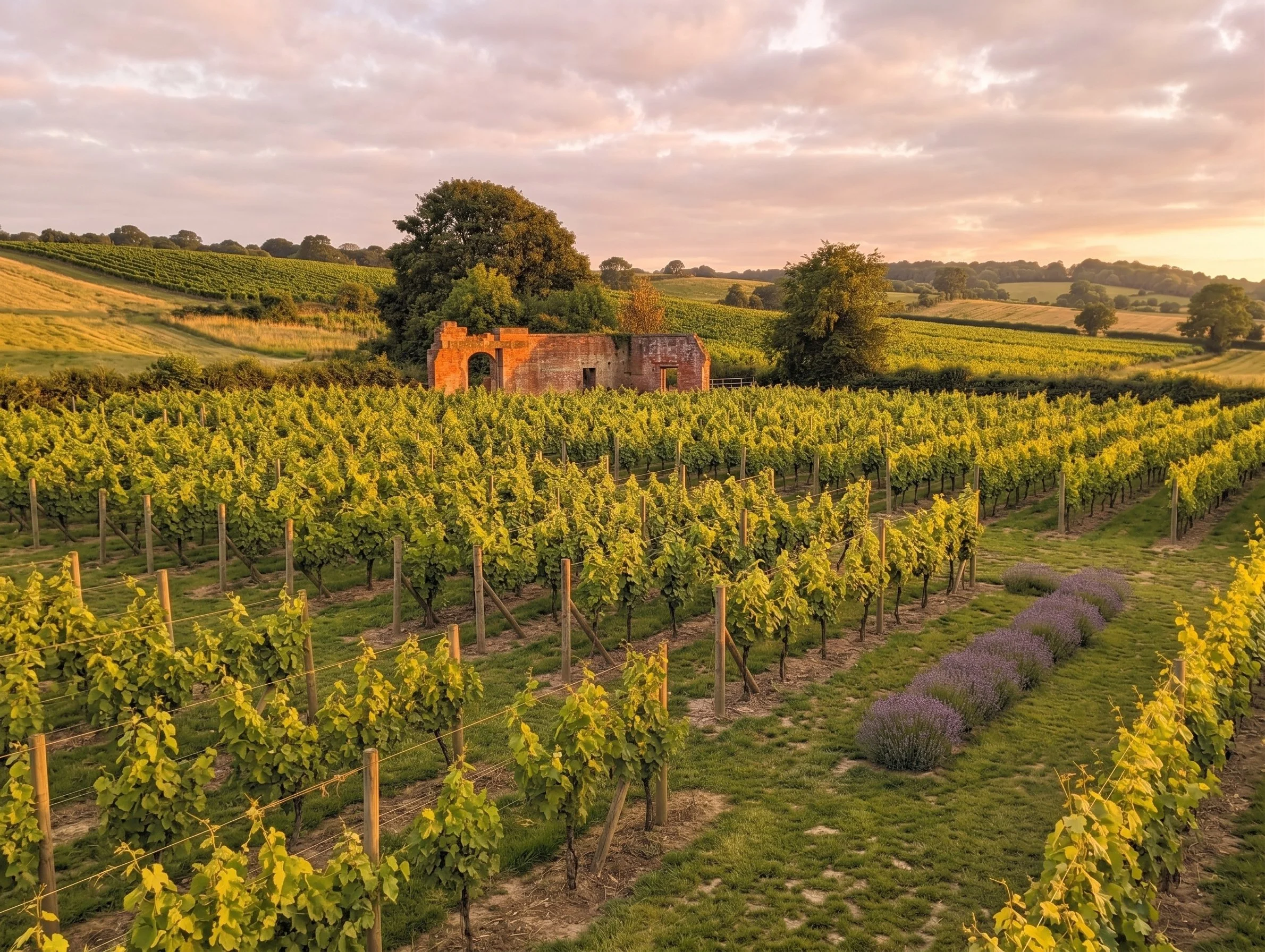
Do you have space for vineyard accommodation?
You don't have to build a hotel to offer vineyard accommodation
The idea of adding accommodation can quickly sound like an entirely new business.
Reception desks.
Corridors.
Restaurants.
Large planning applications.
Dozens of bedrooms.
That is not the only model.
A vineyard accommodation strategy could begin with a small number of standalone lodges positioned around the estate.
Two units.
Three.
Five.
Perhaps more if demand, planning and the landscape support it.
This allows owners to think in terms of keys rather than hotels.
A carefully planned lodge can offer a private bedroom, spa-style bathroom, terrace and somewhere to enjoy wine and food in the evening without introducing a large hospitality building into the vineyard landscape.
The accommodation can then grow alongside proven demand rather than requiring the estate to commit immediately to a conventional hotel model.
Planning permission, highways, drainage, ecology, utilities and other requirements will of course remain site-specific, so any proposed development should be assessed professionally before investment decisions are made.
Design vineyard accommodation around the land — not the other way around
The best vineyard accommodation should not compete with its setting.
It should make guests notice it more.
Where does the sun set?
Which direction provides the longest view through the vines?
Where can each guest have privacy without losing connection to the estate?
What will they see when they wake up?
Where will they sit with a glass of wine at 8pm?
How does the room feel during a wet February weekend rather than only on a perfect July evening?
These questions are more important than simply fitting the greatest possible number of units onto the site.
For premium accommodation, low density can be part of the product.
Large areas of glazing can frame views. Natural materials can connect the interior with the landscape. Thoughtful acoustics can make the building feel quiet. Good thermal performance can make the same stay enjoyable in January as it is during harvest.
The goal is not simply somewhere to sleep after a wine tasting.
It is accommodation that feels as considered as the wine itself.
That approach closely reflects the principle that nature-connected accommodation should support deeper rest, calm and year-round comfort rather than relying on appearance alone.
Vineyard accommodation can work beyond the summer season
One of the strongest reasons to invest in high-quality vineyard accommodation is the potential to create reasons to visit throughout the year.
Summer may be the obvious season for vineyard tourism, but the estate changes character throughout the calendar.
Spring offers new growth and quieter countryside breaks.
Summer brings long evenings, outdoor tastings and dining.
Autumn brings harvest, changing colours and one of the strongest connections between the guest and the winemaking process.
Winter creates an entirely different proposition: quiet weekends, private tastings, food and wine experiences, saunas, fireside evenings and restorative countryside stays.
The building itself matters here.
Accommodation designed primarily as a summer product may struggle to command the same appeal in February.
A well-insulated, thermally stable and comfortable space gives the vineyard a better opportunity to sell twelve months of experiences rather than one season of views.
Accommodation can make your existing vineyard experiences more valuable
The investment case becomes even stronger where a vineyard already hosts events.
A wedding venue becomes more attractive when the couple or close family can remain on the estate.
A private tasting can become a wine weekend.
A chef-led dinner can become a one-night package.
A corporate event can become a countryside retreat.
Wine-club members can be invited to exclusive overnight experiences.
Anniversaries and birthdays can include bottles, hampers or private dining.
The accommodation therefore doesn't need to operate separately from the rest of the vineyard.
It can make existing products easier to package, upgrade and sell.
Tinwood provides a good real-world example: accommodation is combined with breakfast, vineyard tours, wine purchases, dinner hampers and celebration packages rather than being treated simply as a bed for the night.
Accommodation can also make vineyard businesses more resilient
Wine production is agriculture.
Agriculture brings uncertainty.
Weather, yield and growing conditions will always influence production from one vintage to another.
Hospitality provides a different type of revenue.
The view across the vines can still be sold even when a particular harvest is difficult.
A tasting room can still welcome customers.
A lodge can still host an anniversary.
A restaurant can still serve dinner.
This doesn't remove the risks inherent in running a vineyard, but it can broaden the number of ways in which the land, brand and customer base generate income.
WineGB itself describes tourism — including cellar door sales, tours, dining and accommodation — as an important contributor to both vineyard revenue and resilience.
The bigger opportunity is owning more of the customer journey
A traditional vineyard business might think about its customer journey as:
Grow → Produce → Bottle → Sell
Wine tourism extends it:
Grow → Produce → Visit → Taste → Sell
Vineyard accommodation can take it further:
Grow → Produce → Visit → Taste → Stay → Dine → Buy → Return
That final model keeps more of the visitor economy on the estate.
Instead of recommending a local hotel after a tasting, the vineyard becomes the hotel.
Instead of the guest drinking somebody else's wine over dinner, they can continue discovering yours.
Instead of waking up several miles away, they wake up looking across the vines that produced what they were drinking the evening before.
This is where vineyard accommodation becomes more interesting than simply adding bedrooms.
It allows the vineyard to own more of the experience surrounding its own product.
Could vineyard accommodation be the next chapter for your estate?
There are now more than 1,100 registered vineyards in the UK, yet only around 300 vineyards and wineries are currently open to visitors.
And accommodation remains a much smaller part of that market. One specialist UK vineyard directory currently identifies 91 vineyard accommodation listings. It is not an official industry census and will not capture every property, but it demonstrates that overnight vineyard stays remain considerably less common than vineyard visits themselves.
That gap is interesting.
British wine has already created a reason to visit.
The next evolution may be giving more visitors a reason not to leave.
For estates already offering tastings, tours, events or food, a small number of carefully positioned luxury lodges could create a new layer of revenue without losing the identity of the vineyard itself.
Perhaps that is where the future of British wine tourism becomes particularly exciting.
Not simply visiting a UK vineyard.
Staying in one.
Could your visitors stay a little longer?
Vineyard Accommodation FAQs
How can vineyard accommodation increase revenue?
Vineyard accommodation introduces room revenue while also extending the amount of time guests spend on the estate. This can create additional opportunities to sell wine, food, tastings, events and upgrades. The commercial impact will depend on nightly rates, occupancy, operating costs and the wider visitor offer.
What type of accommodation works well on a vineyard?
Boutique hotel rooms, converted estate buildings, cottages, shepherd's huts, glamping and purpose-built vineyard lodges can all work. For estates seeking premium accommodation while maintaining a low-density rural environment, standalone luxury lodges can allow units to be positioned around views and privacy rather than concentrated within one large building.
How many vineyard lodges should an estate start with?
There is no universal number. Demand, planning, infrastructure, available land and investment appetite should determine the appropriate scale. For some estates, a small number of two to five units may provide an opportunity to test the overnight market before considering expansion.
Can vineyard accommodation operate year-round?
Potentially, yes. Vineyard accommodation can be packaged around seasonal experiences ranging from summer tastings and harvest weekends to winter food, wine and wellness breaks. Building quality, thermal performance and the strength of the year-round guest proposition will influence achievable occupancy.
Does vineyard accommodation require planning permission?
New vineyard accommodation will normally require site-specific planning consideration, and requirements can vary considerably according to location, existing land use, access, ecology, drainage, landscape designations and the type of development proposed. Vineyard owners should seek professional planning advice before committing to a project.
Why are vineyard stays becoming more popular in the UK?
The UK wine industry and wine-tourism market have both expanded significantly. WineGB reports approximately 300 vineyards and wineries currently welcoming visitors and around 1.5 million vineyard and winery visits, while accommodation is one of the areas producers have identified for future tourism investment.