How Do We Know Our Cabins Are Designed for Deeper Rest?
Because we do not rely on appearances alone. We test how the building actually performs.
Our newest addition, the NordSky luxury cabin, has completed its independent airtightness test ahead of arriving at our showspace in the coming weeks.
The result gives site owners measurable evidence of the build quality hidden beneath its timber finishes—and helps explain why a THC Homes cabin feels quieter, calmer and more comfortable throughout the year.
Luxury cabin build quality goes beyond what you can photograph
When comparing luxury cabins or glamping accommodation, it is easy to focus on what can be seen:
The kitchen. The lighting. The timber finishes. The freestanding bath. The view through the glazing.
But some of the most important differences between one cabin and another are hidden.
They are found around the windows, beneath the floor, within the roof and wherever two parts of the building meet. These details determine whether warm air remains inside—or whether heat, cold, draughts and external noise can continually pass through unnoticed gaps.
A cabin can look beautiful in photographs while still feeling uncomfortable during a cold January evening or an unusually hot summer.
That is why we test our buildings.
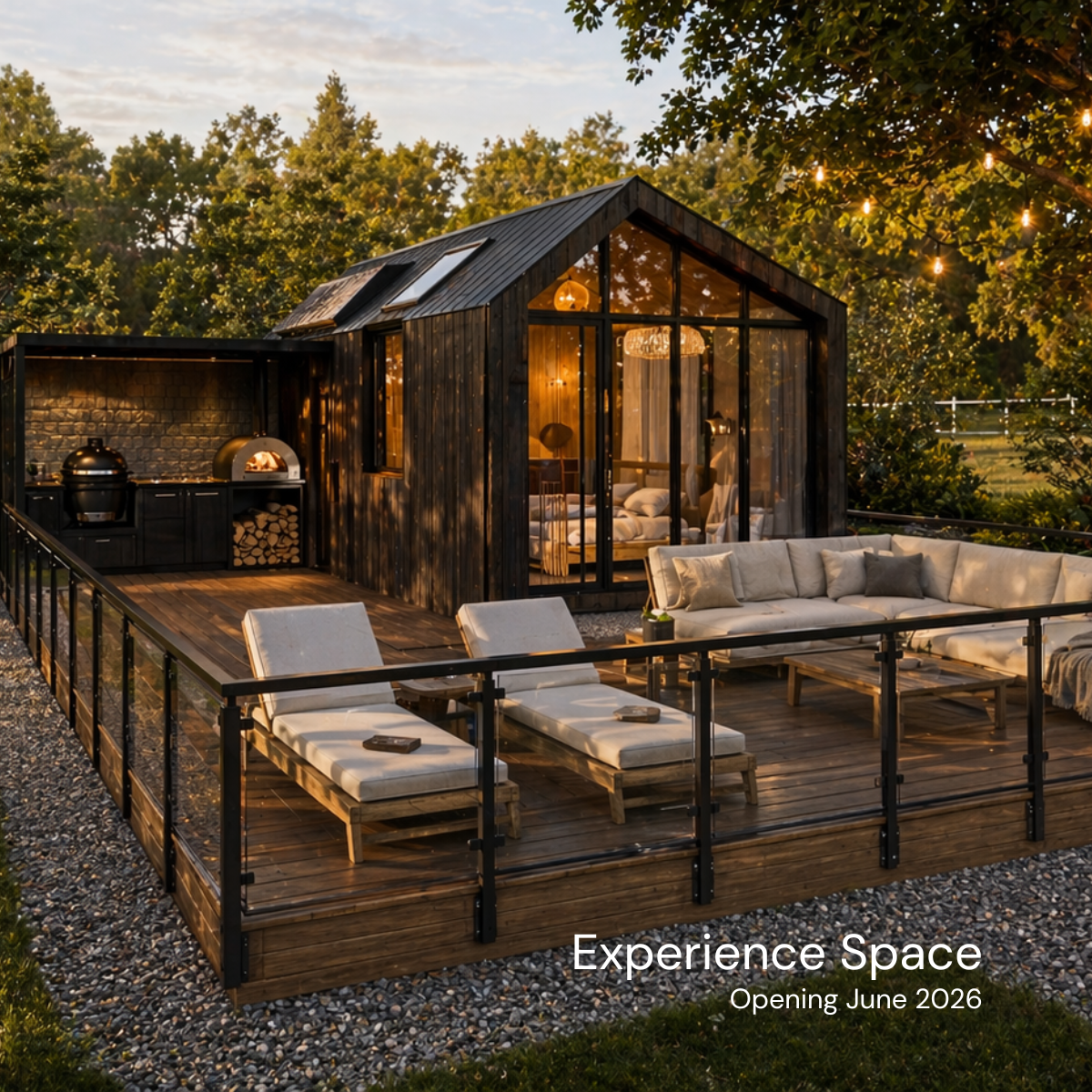
NEW Showspace launching!
What is a blower-door test?
A blower-door test measures how airtight a completed building is.
A calibrated fan is temporarily fitted into an external doorway. The cabin is then pressurised and depressurised while specialist equipment measures the volume of air passing through unintended gaps in the building envelope.
In simple terms, the test asks:
How long does the exterior air get inside the building?
The NordSky was independently tested in both directions at pressures of up to 55 pascals, in accordance with EN ISO 9972:2015. The assessment took place at the factory on 14 July 2026.
The NordSky airtightness result
The NordSky achieved:
0.87 m³/(m²·h) at 50 Pa
This is its measured air permeability: the volume of air passing through the external building envelope under test conditions.
Its corresponding air-change result was:
1.45 air changes per hour at 50 Pa
The lower the result, the less uncontrolled air leakage there is through the structure.
How does NordSky compare with the UK market?
To make the comparison easier to understand, we can express the results using air changes per hour for a building with the same size and proportions as NordSky:
Certified Passive House:0.6 ACH or lower
THC Homes NordSky:1.45 ACH
UK Building Regulations equivalent: approximately 13.3 ACH
Typical caravans and leisure lodges: generally no set requirement due to lower building regulations
This means the NordSky tested approximately 91% tighter than the UK regulatory maximum equivalent for a building of its dimensions.
It also places NordSky considerably closer to Passive House airtightness performance than to the UK Building Regulations baseline.
We are not claiming that this NordSky is a certified Passive House. Passive House certification assesses more than airtightness alone. The comparison demonstrates how seriously we approach the quality of the building envelope.
What does airtightness mean for your guests?
Guests will probably never ask about air permeability or air-change rates.
They will notice the results.
They notice when there is no cold draught beside the bed. When the temperature feels even throughout the space. When outside sounds soften after the door closes. When the cabin remains comfortable overnight without the heating constantly responding to heat loss.
Airtightness does not work alone, and a high-performance cabin still requires carefully designed ventilation, insulation, glazing and temperature control.
But controlling unintended air leakage is fundamental to creating the quiet, stable environment that supports deeper rest.
The guest may never understand why the cabin feels different.
They simply leave feeling that it did.
What does better cabin build quality mean for your business?
Greater potential for year-round bookings
A luxury glamping cabin that remains warm and comfortable in colder weather gives operators a stronger foundation for extending the season.
Instead of relying predominantly on spring and summer demand, site owners can offer accommodation designed to perform throughout autumn and winter.
This can support better annual occupancy and make the business less dependent on a short peak-booking period.
More controlled energy performance
Heating a leaky cabin is like continually filling a container with a hole in it.
Reducing uncontrolled air leakage allows the heating and ventilation systems to operate within a more controlled environment. Actual energy use will always depend on weather, occupancy and guest behaviour, but a carefully sealed envelope reduces one significant source of avoidable heat loss.
A quieter and more consistent guest experience
Your guests may book because of the photographs, the location or the view.
Their review is shaped by what it was like to stay there.
Stable temperatures, quiet interiors and the absence of uncomfortable draughts are rarely listed as headline amenities. Yet they strongly influence whether someone relaxes, sleeps well and recommends the experience to somebody else.
Evidence behind the specification
The words luxury, premium and high quality appear throughout the leisure-accommodation market.
Independent testing gives those words substance.
The NordSky result demonstrates that our approach to luxury is not limited to expensive fittings or photogenic interiors. The quality continues behind the finished surfaces, where the building’s long-term comfort and performance are determined.
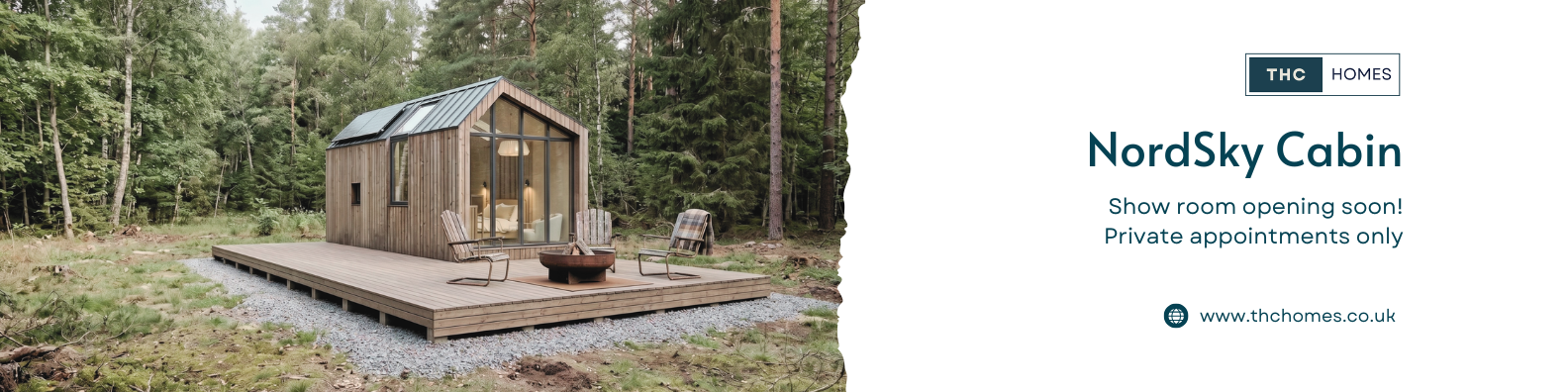
NordSky 1 Bed Cabin
Built differently, so your guests feel the difference
We believe luxury should be experienced through the entire building.
It is the quiet beneath someone’s footsteps.
The comfortable temperature at the end of a hot day.
The absence of a cold draught beside the bed.
The feeling that the cabin is protecting the person inside rather than asking them to adapt to it.
THC Homes creates wellness-led luxury cabins and leisure buildings designed to support deeper rest, year-round comfort and lasting site performance.
The NordSky blower-door result provides measurable evidence of that philosophy in practice.
Experience the NordSky at our showspace
The NordSky will arrive at our showspace within the coming weeks.
Visitors will be able to explore the layout, materials and finishes—but, more importantly, step inside and experience what considered construction does to the atmosphere of a space.
Visits are strictly by appointment, with no walk-ins.
To register your interest, respond to our email or contact info@thchomes.co.uk.
FAQ
What is a good airtightness result for a cabin?
A lower airtightness result indicates less uncontrolled air leakage through the building envelope. NordSky achieved 0.87 m³/(m²·h) at 50 Pa, equivalent to 1.45 air changes per hour under the test method used.
Is NordSky a Passive House cabin?
NordSky is not being marketed as a certified Passive House. However, its airtightness result of 1.45 ACH is substantially closer to the Passive House criterion of 0.6 ACH than to the equivalent UK Building Regulations maximum for a building of NordSky’s proportions.
Why does airtightness matter in a glamping cabin?
Good airtightness helps reduce unwanted draughts and heat loss and supports more stable internal temperatures. Combined with appropriate insulation, glazing and ventilation, it contributes to a quieter and more comfortable year-round guest experience.
Can an airtight cabin still have fresh air?
Yes. Airtightness reduces uncontrolled air leakage through construction gaps. Fresh air is introduced through a purpose-designed ventilation system allowing the building to mechanically breathe, managing damp and stale air more effectively.
Are THC Homes cabins suitable for year-round use?
THC Homes cabins are designed around year-round guest comfort, with high-performance building envelopes, substantial insulation, triple glazing and controlled ventilation specifications selected to suit each building.