When Is It Worth Upgrading Your Holiday Lodges? What Premium Accommodation Should Deliver
For established holiday parks, retreats, vineyards and hospitality businesses, replacing existing accommodation is rarely a simple decision.
Older lodges may still be occupied. They may still generate revenue. Guests may still book them.
But that does not necessarily mean they are still performing as well as they could.
Across the UK leisure sector, operators are increasingly being pushed to make their accommodation work harder: attracting higher-value guests, supporting stronger nightly rates, reducing maintenance burden, extending the season and improving the overall guest experience. Industry commentary is already focusing on whether ageing accommodation is quietly limiting earning potential, even when it remains perfectly usable.
So perhaps the better question is not:
“Do our existing lodges still work?”
It is:
“What should the next generation of our accommodation do better?”
For operators considering replacing older lodges, adding a premium tier or expanding with new cabins, there are several things worth looking at before choosing the next model or manufacturer.
1. Premium accommodation should help justify a premium nightly rate
A premium lodge should offer more than an upgraded kitchen and a few expensive finishes.
Guests are increasingly willing to spend more when the experience itself feels better, and hospitality data for 2026 shows average daily rates continuing to rise across many markets while travellers increasingly seek higher-quality experiences.
The important word is experience.
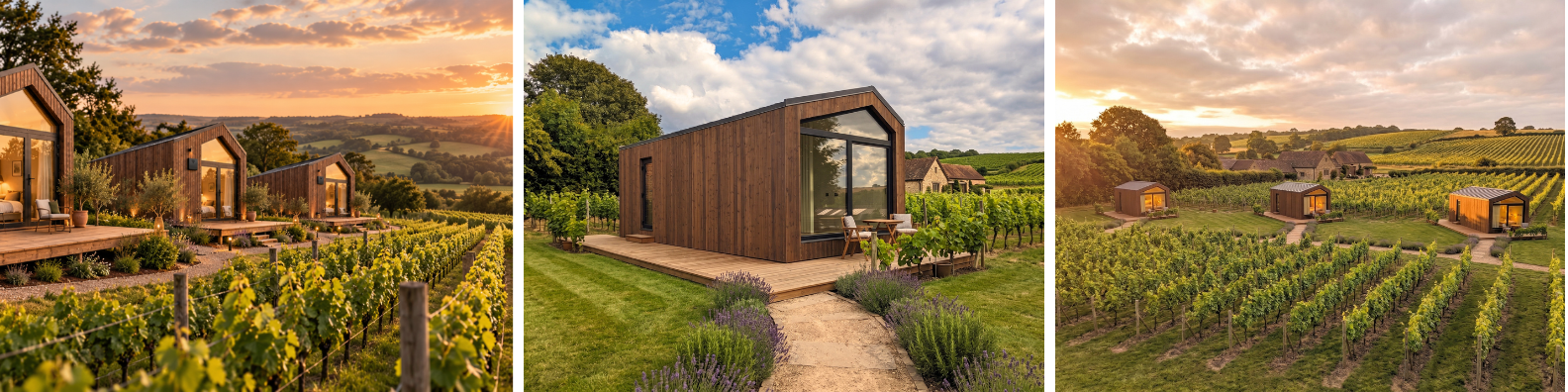
For a park, vineyard or retreat, that might mean generous glazing overlooking the landscape, a private sauna, considered lighting, natural materials, a beautifully proportioned bathroom or an interior that feels more like a boutique hotel than a conventional holiday lodge.
But it should also include something harder to photograph:
how the building feels to stay in overnight.
A premium cabin should be quieter.
It should remain comfortable when the weather changes.
The air should feel fresh.
The interior should feel calm rather than overstimulating.
Guests should wake feeling that they stayed somewhere genuinely better, not simply somewhere that looked better online.
That distinction matters if the objective is to move accommodation further upmarket.
2. Ask how the lodge performs at 3am
Most accommodation is sold during daylight.
Beautiful photography shows the architecture, furniture, landscape and interiors.
But much of the guest's actual experience happens when none of those things matter quite as much.
At 3am, the important questions become very different.
Can they hear the neighbouring lodge?
Has the bedroom become cold?
Can they feel a draught?
Is the room stuffy enough that they need to open a window?
Are services or pipework creating noise inside the building?
Does the interior still feel comfortable once the heating cycles off?
This is where premium accommodation begins to move beyond aesthetics.
At THC Homes, our approach to deeper rest considers air, temperature, acoustics, light, materials and spatial design together rather than treating wellness as one optional feature.
A sauna can enhance a stay.
A hot tub can create a memorable moment.
A beautiful bed can improve the room.
But none of those things can compensate for accommodation that is uncomfortable, noisy or poorly ventilated through the night.
For operators upgrading their stock, this is one of the biggest opportunities to reconsider what “premium” actually means.
3. Better accommodation should help extend the usable season
Summer occupancy can hide weaknesses in a building.
A lodge that feels perfectly comfortable during mild weather may behave very differently during January, February or a wet October weekend.
For operators looking to grow shoulder-season and winter bookings, the building envelope becomes increasingly important.
High levels of insulation, good airtightness, high-performance glazing and carefully designed junctions help reduce unwanted heat loss and temperature swings. Heating and cooling can then complement the building rather than continually compensate for poor thermal performance.
This is commercially relevant.
UK hospitality data is showing travel spreading more evenly across the year, with shoulder seasons taking a greater share of demand in many markets.
If guests are increasingly willing to travel outside the traditional summer peak, accommodation has to feel genuinely comfortable outside it too.
For established operators, the question becomes:
Could your next accommodation investment help you sell more nights across the whole year rather than simply add more capacity in summer?
4. The next lodge should reduce operational friction
Experienced operators know that the purchase price of accommodation is only the beginning.
A lodge can look fantastic when it arrives but become expensive if it is difficult to clean, maintain or repair.
This is why hospitality design needs to consider the people operating the building as well as the people staying in it.
Cleaning teams need surfaces that can be reset quickly.
Maintenance teams need sensible access to services.
Bathrooms need materials and fittings capable of repeated use.
Furniture has to survive constant turnover.
Storage needs to work for short stays without creating unnecessary cleaning burden.
Our own design standards consider housekeeping and operational requirements during the design stage because a beautiful interior that is slow to reset or difficult to maintain is not successful hospitality design.
Current industry guidance makes the same commercial point: park operators are increasingly looking not only at booking potential, but also maintenance and turnaround efficiency when selecting accommodation.
For an established site, that matters.
A premium product should not simply generate more revenue.
It should also be easier to own.
5. Premium lodges can help reposition an existing site
Replacing accommodation does not necessarily mean replacing every unit at once.
For some operators, introducing a small number of higher-specification cabins or lodges can create an entirely new tier within an existing destination.
That could mean:
standard lodge → premium wellness lodge
vineyard visit → overnight vineyard escape
wedding venue → destination wedding stay
traditional retreat accommodation → deeper-rest experience
holiday park → boutique lodge destination
This gives operators an opportunity to test a different guest profile and potentially achieve a higher average nightly rate without rebuilding the whole site.
The wider holiday park sector continues to invest significantly in accommodation and guest experience. Parkdean Resorts, for example, says it has invested more than £200 million across its estate over the past three years and continues to prioritise upgraded accommodation and facilities.
The important point is not to copy larger operators.
It is that accommodation is an asset that needs continual reinvestment if a destination wants to remain relevant.
For smaller, independent parks and retreats, carefully choosing what replaces ageing stock can have an even bigger impact on brand perception.
6. Natural materials and calm interiors can help accommodation age more gracefully
One of the risks with aggressively trend-led interiors is that they can date quickly.
A fashionable finish may photograph brilliantly when a lodge launches but feel tired several seasons later.
For long-term hospitality use, we favour a more restrained approach: natural timber, warm neutral tones, clean detailing, considered lighting and fewer competing materials.
The aim is to create interiors that feel premium without depending on excessive decoration.
Our design philosophy is intentionally Scandinavian and Japandi in influence, with natural materials used in a contemporary way and an emphasis on creating a calm visual environment.
For operators replacing accommodation on a multi-year investment cycle, that matters.
You are not designing for next month's Instagram post.
You are investing in something that needs to continue feeling credible to guests years from now.
7. Wellness should begin with the building, not the amenities list
Wellness tourism has changed considerably.
For a long time, adding a hot tub to the decking was enough for accommodation to be marketed as a wellness stay.
Guests are becoming more sophisticated.
They increasingly understand that recovery is affected by sleep quality, temperature, air quality, noise, lighting and the overall environment they spend time in.
That means the next generation of wellness accommodation is likely to move beyond individual amenities and consider the building itself.
At THC Homes, mechanical ventilation is used to provide a continuous supply of fresh filtered air while removing stale and moisture-laden air. Our approach also considers stable thermal conditions, quieter interiors and the use of natural materials as part of the guest environment.
This is where we believe deeper rest has a role within premium leisure accommodation.
The guest may never understand the wall build-up.
They may never ask what ventilation system has been installed.
They probably will not know the airtightness performance of the building.
But they can feel the outcome.
They notice when a room is quiet.
They notice when the temperature remains comfortable.
They notice when the air does not feel stale in the morning.
They notice when a building feels calm.
Those invisible details can become part of the value of the stay.
8. Consider whole-life value, not simply purchase price
For commercial operators, comparing two lodges purely by upfront price can be misleading.
A lower-cost unit may make sense where the commercial model depends on volume and lower nightly rates.
But where an operator wants to create a premium offering, it can be more useful to consider the broader equation:
What nightly rate can this accommodation support?
How many months of the year can we confidently sell it?
How will it affect guest reviews?
How frequently will finishes need replacing?
How much maintenance will it require?
Will the design still feel current in ten years?
Does it strengthen the positioning of the wider site?
The UK lodge sector increasingly talks about accommodation in exactly these investment terms, with manufacturers and operators focusing on durability, booking potential, profitability and long-term returns rather than specification alone.
Premium accommodation costs more for a reason.
The question is whether that additional investment is being spent on things that genuinely matter to the business and its guests.
When should an operator consider replacing existing lodges?
There is no single replacement age that applies to every park or retreat.
Instead, look for commercial signals.
Your accommodation may be ready for review when guest expectations have overtaken the specification, when maintenance is increasing, when older units are restricting your nightly rate, when your brand has moved upmarket but your accommodation has not, or when you want to attract a different type of guest.
It may also be worth reviewing the stock when you are expanding.
Adding more of exactly what already exists is not always the strongest strategy.
Expansion can be an opportunity to introduce accommodation that performs differently.
For example, an established retreat may choose to add a small number of sauna cabins aimed at couples.
A vineyard might add accommodation designed around quiet overnight stays, views and slow mornings.
A wedding venue may introduce premium guest lodges rather than building additional conventional hotel bedrooms.
A holiday park may replace selected older units with a higher-value lodge category.
In each case, the new accommodation is doing more than providing additional beds.
It is changing what the destination can offer.
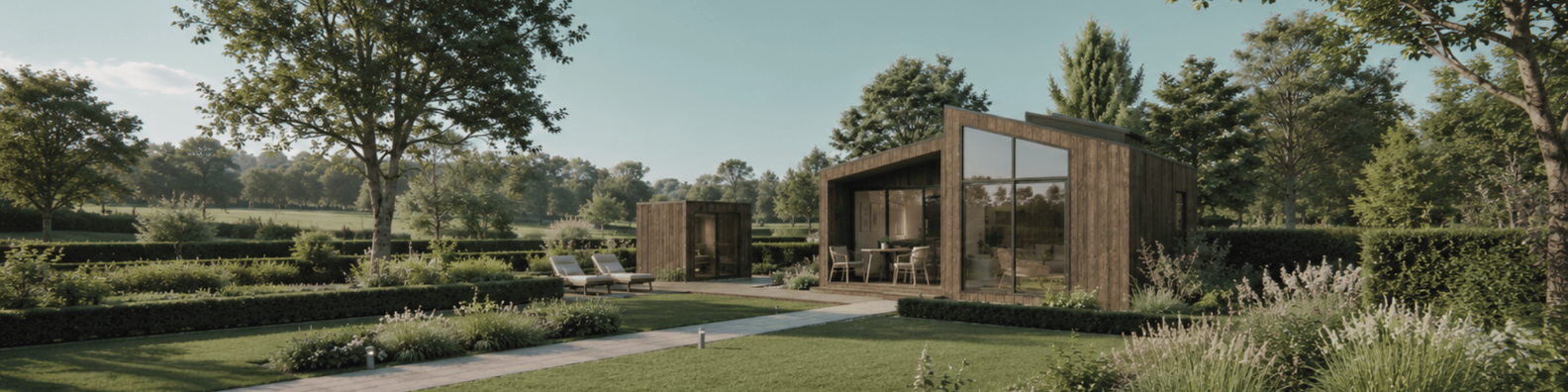
NordStar Deeper Rest Lodge
Who is premium lodge investment right for?
Premium accommodation is not necessarily the right starting point for every leisure project.
For businesses still determining whether accommodation is commercially viable, resolving land use, planning, access, infrastructure and the overall financial model may need to come first.
Premium lodge investment tends to make the most sense for established operators that already understand their market and are looking to:
replace ageing accommodation;
expand an existing successful site;
create a higher-value accommodation tier;
strengthen year-round demand;
improve guest experience;
reduce reliance on traditional static accommodation; or
move their destination further into the premium or wellness market.
For these businesses, the conversation changes.
It is no longer simply about finding a cabin.
It is about selecting the right building for the next stage of the business.
What should your next lodge deliver?
If you are already operating a successful holiday park, retreat, vineyard or hospitality destination, the next generation of your accommodation should do more than replace what was there before.
It should improve the guest experience.
It should work harder across the seasons.
It should support the commercial positioning of your site.
It should be designed around the realities of hospitality operation.
And, increasingly, it should help guests achieve what many came away looking for in the first place:
a genuinely deeper level of rest.
A premium lodge should look different.
But more importantly, when the door closes, it should feel different too.